Homes in Kenmore often still run on panels sized for a much smaller household, and homeowners notice it when the breaker box has no empty slots left. Local electricians connected through the wider electrical contractor in Seattle network handle these panels daily, alongside professional electrical panel upgrade work for houses that have outgrown their original service.
That mismatch between old capacity and new demand is exactly why homeowners here call someone who already knows these houses, not a general contractor.
Why Local Knowledge Changes Outcomes in Kenmore
A local electrician working across Kenmore knows where the panel usually sits, what was installed when the house went up, and which shortcuts earlier owners took, so the first visit is diagnosis rather than guesswork.
Two kinds of work come up again and again: replacing a panel that cannot take another circuit, and adding circuits for rooms that now run far more than they were built for. Homeowners nearby also reach out through electrical contractor in Bothell, WA for similar panel work.
A panel that trips under normal use will not fix itself. Get it looked at before it fails when you need it most.
Matching the Work to How Kenmore Homes Are Built
A fix that works in a slab-on-grade house downtown often fails in a Kenmore home with a crawlspace or a detached garage, because the path a wire has to take is completely different.
Detached homes here often carry a workshop or a shed with its own circuit run, while houses over a crawlspace need extra care routing new wire without opening the ceiling below. Homeowners pairing a panel upgrade often add quality ceiling fan installation at the same time.
Four services fit this kind of home especially well: reliable electrical panel installation, expert home electrical inspections, specialists in outlet repair, and professional generator installation for homes that lose power during storms.
What the Age of Kenmore Homes Still Decides
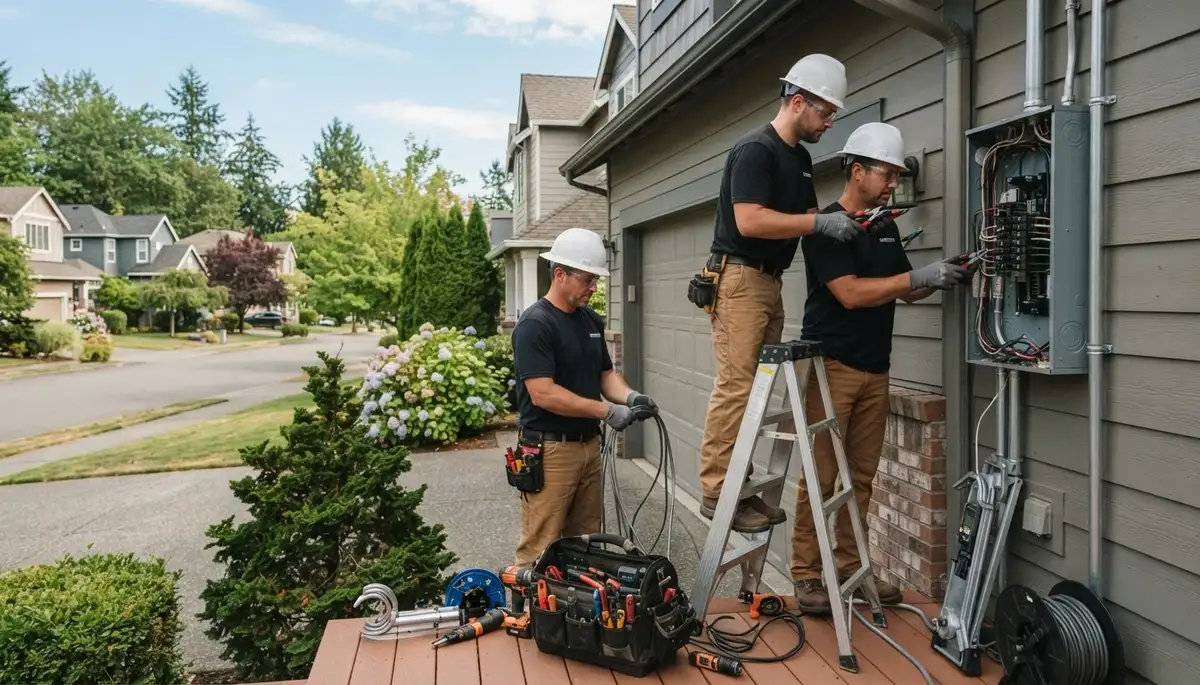
A lot of Kenmore homes went up in the decades when panels were sized around 60 to 100 amps, long before central air, electric ranges, and car chargers were part of the load. That original wiring still shapes three things today: how many circuits are available, whether outlets are grounded, and how much the panel can safely handle at once.
Panel Has No Room Left
Homeowners notice the breaker box is full, with no empty slots for a new circuit, and the panel still uses fuses instead of breakers in some cases. Left alone, it forces new demand onto circuits that were never meant to share it.
Local electricians replace the panel with one sized for current and future loads, run new circuits where needed, and confirm everything meets what current wiring should look like. Homeowners near electrical contractor in Kirkland, WA see the same pattern often.
Two-Prong Outlets Still in Use
Older outlets with only two slots, and no reset buttons near sinks or the kitchen, point to wiring installed before grounding and ground-fault protection were standard. It leaves appliances and people exposed to a shock that a modern outlet would prevent.
Electricians replace these outlets with grounded, protected versions, and add proper grounding to the circuit itself. Afterward, kitchens and bathrooms meet the safety expectations of a modern home.
Outlets Warm to the Touch
Years of use have left some connections loose or corroded, especially where aluminum wiring was used, and outlets or switch plates feel warm during normal use. That heat is a sign the connection can no longer carry its load safely.
Electricians correct these connections or replace the wiring outright, improving both safety and the reliability of the circuits that were affected.
Car Charger Trips the Whole House
A new car charger, added air conditioning, or shop tools in the garage push a panel that was sized decades ago past what it can handle, and a hot spell only makes the strain more obvious. The result is a breaker that trips under normal daily use.
Electricians add capacity through a panel upgrade or a dedicated circuit sized for the new load, so the charger, the air conditioning, and the kitchen can all run together without tripping anything.
Tight Lot Complicates Access
A narrow side yard or a detached garage set back from the house means running new wire takes longer and may require opening a wall or ceiling to reach the panel.
Electricians plan the route in advance, use the crawlspace or attic where possible, and patch any opening cleanly, so the job stays contained and disruption stays minimal.
Call (206) 800-6002 to arrange a no-pressure visit with a local electrician who can look at the panel, the wiring, and what your home actually needs.
On Call Electrical backs every job with work built to last.

Electrical Services Available Across Kenmore, WA
The list below covers the range of work local electricians handle regularly. Look through it to find what matches what your home needs right now.
Urgent Electrical Repair Needs in Kenmore, WA
A breaker that will not reset no matter how many times it is flipped. Lights that flicker or dim whenever a large appliance starts. An outlet that has stopped working with no clear cause. A burning smell near a switch or outlet plate. A panel making a buzzing or humming sound.
Any of these calls for a same-visit look rather than waiting to see if it happens again.
Panel and Wiring Upgrades in Kenmore, WA
Replacing a fuse box with a modern breaker panel. Adding circuits for a kitchen or laundry room that trips constantly. Upgrading service size to support new appliances. Rewiring sections of a home with old, brittle insulation. Installing dedicated circuits for a car charger or shop equipment.
These jobs address what the home was originally wired for versus what it is asked to carry now, and they are usually the first step before anything else gets added.
Safety and Protection Upgrades in Kenmore, WA
Installing outlets with test and reset buttons near sinks and outdoor areas. Adding whole home surge protection ahead of storm season. Installing smoke detectors tied into a single system. Correcting ungrounded outlets throughout a home. Adding a fire alarm system in homes that never had one.
These upgrades close gaps that were normal when the home was built but are not acceptable by today's standard, and they matter most in homes where the original wiring was never updated for grounding or detection.
Lighting, Outdoor, and Added-Load Work in Kenmore, WA
Installing landscape lighting along walkways and garden beds. Adding security lights at entry points and detached garages. Wiring a pool pump or pool lights for a backyard system. Installing recessed lighting during a kitchen or living room update. Running new circuits for a whole house fan.
This work often comes up once the panel and wiring underneath a home are already sound enough to support it, so it tends to follow rather than lead a larger project.